Behind the Organic Modern Trend
“Organic modern” is a term thrown around a lot on social media these days… but what is it, exactly?
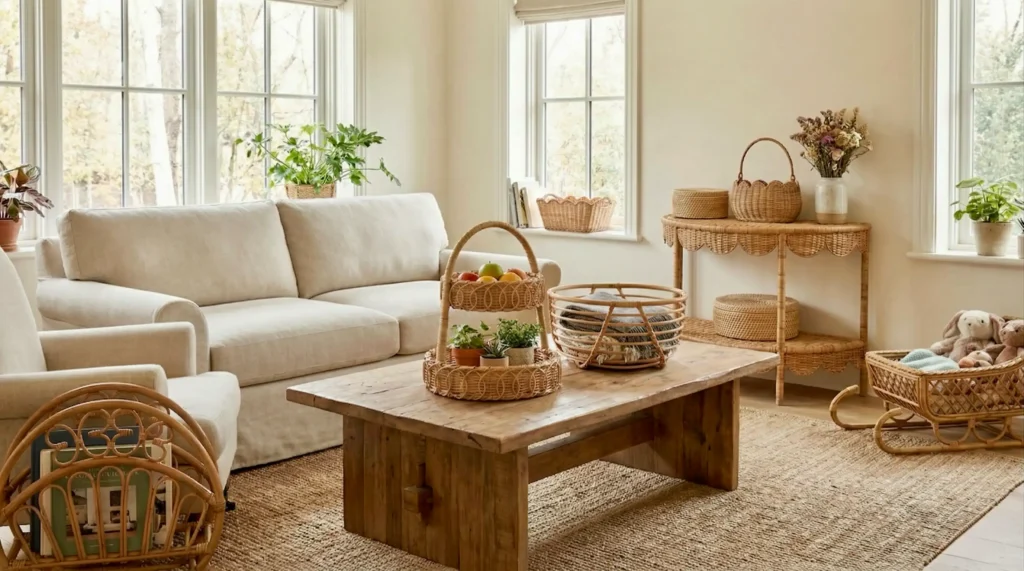
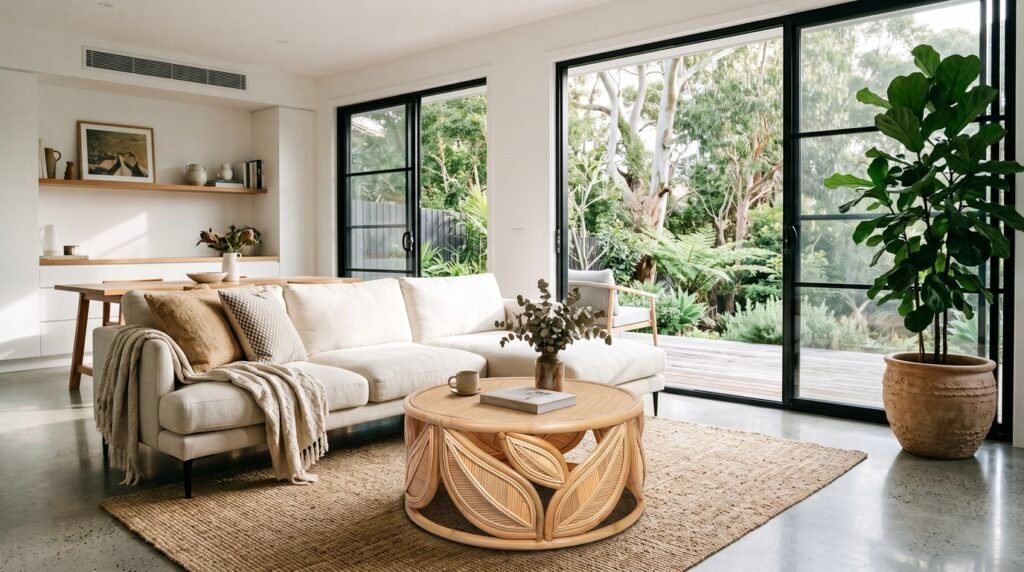
At its core, it’s a design approach that pairs clean, contemporary lines with natural, tactile materials (think wood, stone, woven fiber..) instead of the glass-and-steel minimalism that dominated the 2010s. Kubu rattan has become one of the style’s signature materials, and kubu rattan baskets in particular have shown up everywhere from Scandinavian apartments to American farmhouse kitchens as the texture that keeps a minimalist room from feeling cold.
The Art of the Weave
Where the color actually comes from.
Kubu’s grey tone isn’t dyed on. It comes from soaking the rattan peel in mud and water for several weeks, a traditional process that takes patience and close attention to get right. Left too short, the color doesn’t set; left too long, the fiber can weaken. Done properly, the soak does two things at once: it produces that earthy, weathered grey, and it toughens the fiber, making it more flexible, more resistant to insects, and able to hold up for decades rather than seasons. The color is a byproduct of durability, not the other way around.

Why the weave looks the way it does.
Kubu is typically worked in thicker, heavier strands than other rattan styles, and it’s woven by hand rather than machine. That combination: chunky material, manual technique, is what gives each piece its slightly irregular, tactile texture. No two baskets weave up identically, which is part of why kubu reads as handmade even to someone who’s never handled rattan before.
Most of this rattan is sourced from Kalimantan, then woven in Cirebon, West Java, the region generally considered Indonesia’s center for rattan craftsmanship.
Why it fits where it does.
That texture is exactly what Scandi-rustic, Mediterranean, and American farmhouse interiors are reaching for right now: something with visible material honesty in rooms that otherwise lean minimal or monochrome. A smooth, uniform surface doesn’t do that job. A coarse, hand-tied one does.
European Applications: Scandi-Rustic and Mediterranean Interiors
In Northern Europe, kubu’s grey tones work well against the light woods and neutral textiles typical of Scandinavian interiors. The material adds warmth without introducing color or shine that would break the palette. In Mediterranean interiors, the same grey reads differently: against white plaster walls, kubu’s coarse weave provides texture and contrast rather than tonal matching.

A few specific applications come up often in European interiors:
- By the fireplace: Large utility baskets for firewood storage, chosen for their size and rugged weave rather than as a decorative accent.
- On the wall: Round wall baskets in mixed sizes, arranged as a textured alternative to framed art in hallways or above sideboards.
- On the coffee table: Low round baskets used for everyday storage (magazines, remotes, throws) where a low profile matters for sightlines.
American Applications: Modern Farmhouse and Organic Chic
In the U.S., modern farmhouse design has moved away from its original stark black-and-white palette toward a warmer, more textured version sometimes called “organic chic.” Kubu rattan’s grey tone fits that shift, it softens high-contrast interiors without introducing pattern or color.

Common uses in American homes:
- Kitchen and dining: Bread baskets and serving trays on stone islands or wood tables.
- Mudrooms and laundry rooms: Oval laundry baskets and rectangular storage baskets, chosen for durability in high-traffic utility spaces as much as for looks.
- Seasonal styling: Decorative sleds and large planter baskets (L/XL), swapped seasonally for greenery or holiday displays.
Caring for Kubu Rattan in Western Climates
Natural rattan holds up well, but the shift from the humidity in its original habitat to climate-controlled Western homes changes how it ages. HVAC systems dry the air more than rattan is used to, and direct sun can fade the grey tone unevenly over time.
| Climate factor | What it does | What to do about it |
| Dry HVAC heat | Can make fibers brittle | Wipe occasionally with a slightly damp (not wet) cloth |
| High humidity / damp floors | Moisture can settle into the weave | Keep baskets in ventilated areas; avoid placing directly on damp floors |
| Direct UV exposure | Can fade the grey tone unevenly | Rotate baskets every few months for even aging |
| Dust | Settles into the tight weave | Use a soft-bristle brush or vacuum attachment |
Conclusion
Now we can see why kubu rattan’s appeal isn’t really about a single trend.
It shows up across Scandinavian, Mediterranean, and American farmhouse interiors because the material solves a specific problem each of those styles runs into: how to add warmth and texture to a room without breaking a clean, neutral palette. That’s a more durable reason for a material to stick around than seasonal styling alone.
That staying power is exactly why sourcing matters more than styling.
A basket that’s meant to outlast a trend needs a manufacturer who treats it that way from the start, which is the gap Rattanaa fills. Based in Cirebon and backed by 25 years of production experience, Rattanaa builds every kubu piece on its T.R.U.S.T. framework:
- Trustworthy specs.
- Reliable QC and on-time shipping.
- Upright trade practices.
- Sustainable sourcing that supports local artisans.
- Timeless designs made to hold up past any single season.
For retailers and interior brands stocking kubu rattan for the long haul, that’s the difference between a basket that looks good in a photoshoot and one that still earns its shelf space five years later.
Need more details? See our collection at Kubu Rattan Collection by Rattanaa.