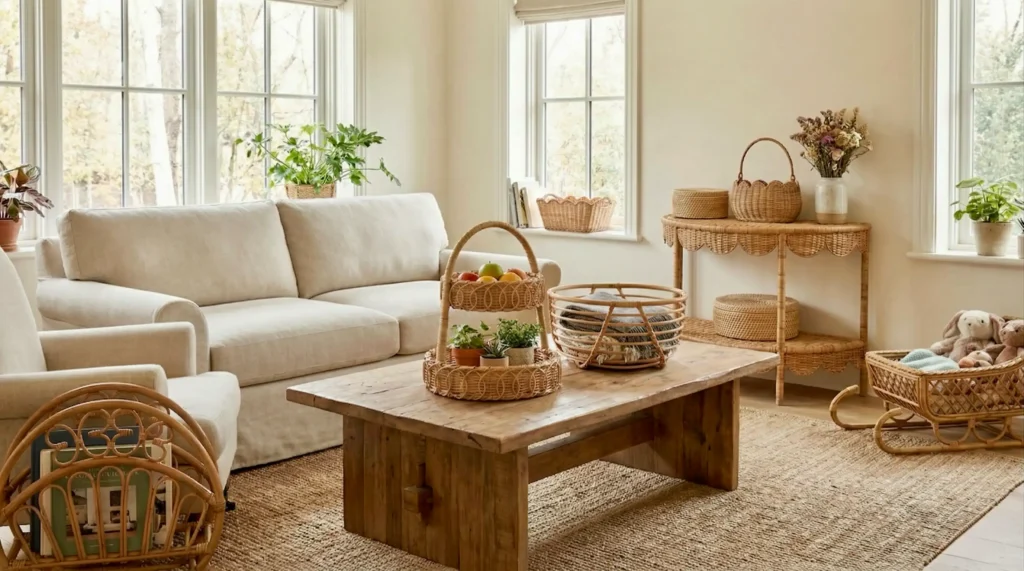
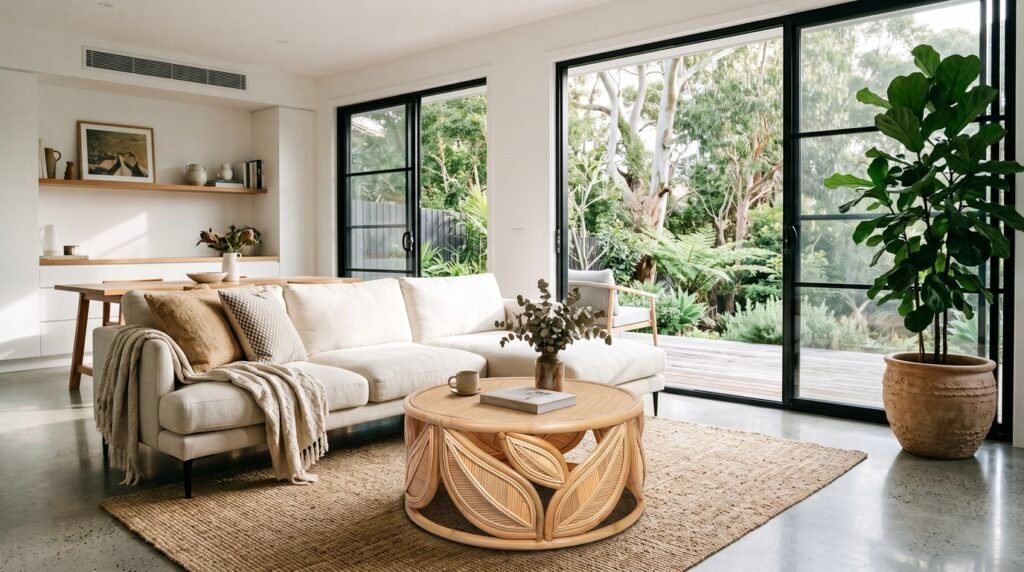
Spend enough time online and eventually someone tells you to “touch grass.” It’s meant as an insult, but there’s something almost prophetic about it: the internet’s own inside joke keeps pointing back to the same cure. Interior design (UK and European homes specifically) has quietly caught the same instinct. “Organic modern” is what happens when that impulse to touch something real and natural makes its way into your living room.
For category managers, sourcing that look at scale usually comes down to one material decision: finding a reliable flowering kubu basket supplier.
Kubu is a natural rattan that goes through a specific processing method to reach its signature grey finish. That “natural grey” tone fits current neutral, earthy mood boards better than standard golden rattan or synthetic wicker does. It reads as intentional and lived-in rather than decorative.
The Infrastructure Behind Cirebon’s Rattan
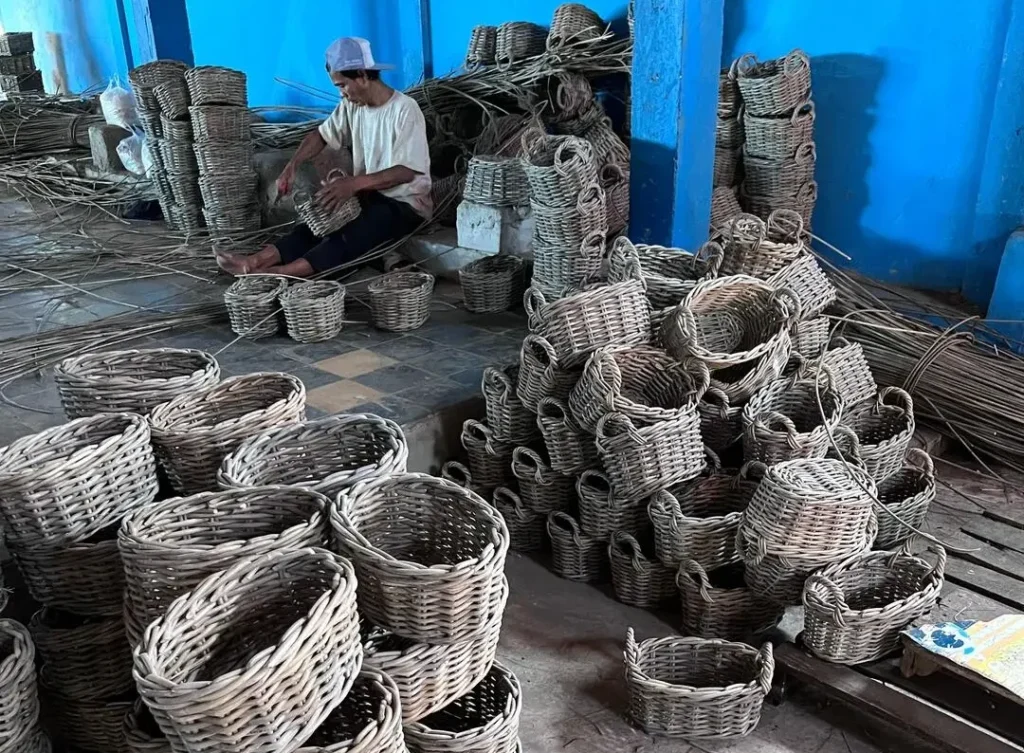
Most of the world’s kubu rattan basket production traces back to the Cirebon area of West Java. In this region, key industry players like Rattanaa manufacture high-quality natural rattan products, driving a significant share of the global rattan trade.
A few things worth knowing about the region:
- Scale: Indonesia accounts for approximately 85% of global crude rattan output, possessing over 56% of all known species.
- Structure: Production runs largely on a “home industry” model: many small, family-run workshops rather than a handful of large factories. This has historically made the sector resilient during economic downturns, since production isn’t concentrated in a few vulnerable facilities.
- History: Tegalwangi’s status as a dedicated rattan-craft village dates back generations, which is part of why the concentration of skilled weavers and supporting infrastructure (frame-makers, finishers, exporters) is unusually deep for a single district.
Here. handmade doesn’t mean unstandardized. Reputable manufacturers in the region combine traditional weaving with select machinery to hit the sizing tolerances and structural consistency European retail buyers expect across a SKU set.
Common equipment used alongside hand-weaving:
- Fitting and cutting machines for precise frame construction
- Dowel machines to keep support thickness and structural integrity consistent across units
- Rattan ovens for moisture control and pest treatment
- Polishing and finishing equipment to bring pieces up to commercial display standard
The weave itself stays manual. The machinery handles the parts where inconsistency would actually be a problem: frame dimensions, structural supports, moisture content.
Sizing and Floral Application
For retailers building seasonal ranges, basket shape matters as much as basket size, since the wrong proportions can make even a well-made basket look mismatched with the plant it’s meant to hold. Here is a short size guide for floral and planter use:
| Basket Style | Specifications (L × W × H) | Target Plant & Seasonal Fit |
 | Round/concave, 28 × 28 × 14 cm | Built for bushy potted flowering plants like cyclamen, mini roses, or chrysanthemums, where the wide, shallow profile supports a full canopy without hiding the pot. |
 | Tapered/conical, 30 × 15 × 15 cm | Sized for standing plants or deeper-rooted varieties such as peace lily or poinsettia, which makes this the shape we see ordered most ahead of UK Christmas ranges. |
 | Oval/elongated, 36 × 14 × 12 cm | Designed for multi-stem arrangements, seasonal bulb mixes, or tabletop floral displays, where the long profile suits a horizontal grouping rather than a single centered plant. |
Retailers building a seasonal range typically don’t need more than these three profiles. The secret is in rotating finish and color tone across a season (rather than commissioning new shapes each time). This keeps production timelines predictable while still giving the range visual variety.
Care Guidance to Pass on to Customers
Providing customers with basic care instructions reduces returns and complaints tied to normal wear being mistaken for a defect. Worth including with any wholesale order:
- Routine cleaning. A vacuum with an upholstery brush attachment for weekly dusting. For deeper cleaning, a mild dish soap solution on a microfiber cloth.
- Weatherproofing. Kubu rattan is best suited to indoor or covered outdoor use. For any outdoor placement, a UV-resistant sealant helps prevent fading and fiber snapping.
- Repair. Kubu’s “over-under” weave pattern makes small repairs straightforward. If a strand breaks, soaking a replacement strand in warm water (32 to 38°C) for 30 to 60 minutes restores enough flexibility to re-weave it without cracking.
Logistics, Customization, and Export Compliance
The next question a B2B buyer usually has once they’re sold on the material itself is a more practical one: “Can this actually be sourced at scale, and will it clear customs without a headache?” That’s less about kubu’s appeal and more about the supply chain behind it.
Cirebon remains a robust export engine for the global market. In the first quarter of 2023 alone, the district recorded $14.6 million in exports specifically for rattan handmade furniture. When sourcing luxury plant baskets wholesale, retailers can leverage this massive export infrastructure.
One practical note for procurement: not every workshop in the region operates with formal bookkeeping or export documentation. Retailers sourcing internationally are generally better served working with established, export-ready manufacturers who handle documentation and quality control directly, rather than sourcing informally through smaller household units.
That’s the kind of partner we’ve built Rattanaa to be. Which, yes, is exactly the kind of thing every supplier claims right before the section where they tell you about themselves. We’ll spare you the theatrics and just show the specifics: here’s how ordering, customizing, and shipping actually works with us.
Order flexibility. We work on a Full Container Load basis. Minimum order is one 20′ container, which can mix up to 10 product types. That means a retailer testing a new range doesn’t have to commit to a single SKU at volume. Custom sizes, shapes, and finishes are also available. Our design team can take a concept through to a production-ready product, with timelines that vary depending on complexity.
Shipping. All prices are quoted FOB from Indonesia. Payment runs 70% down to start production, with the balance due once the container is loaded. Lead times: about 2 weeks for a prototype, 90 to 120 days for new items, 75 to 90 days for repeat orders.
Conclusion
For European retailers, sourcing kubu comes down to three things:
- An industrial-scale supply base.
- Home-industry pricing.
- And weaving techniques that haven’t changed much in generations.
Kubu’s grey, earthy finish already fits where premium home and garden retail is heading. That makes it less a seasonal bet, more a straightforward addition to an existing range.
But the material is only half the decision.
The harder part is finding a supplier who can back it up. Someone who documents where the rattan came from. Who hits shipping dates. Who’s still answering emails a year from now.
That’s the standard we hold ourselves to at Rattanaa. We call it T.R.U.S.T.:
- Trustworthy sourcing and transparent specs
- Reliable production, order after order
- Upright trade practices, regardless of order size
- Sustainable materials, not just sustainable marketing
- Timeless designs that outlast a single trend cycle
Five words. One checklist. The same questions procurement should already be asking.
Need more details? See our collection at Kubu Rattan Collection by Rattanaa.